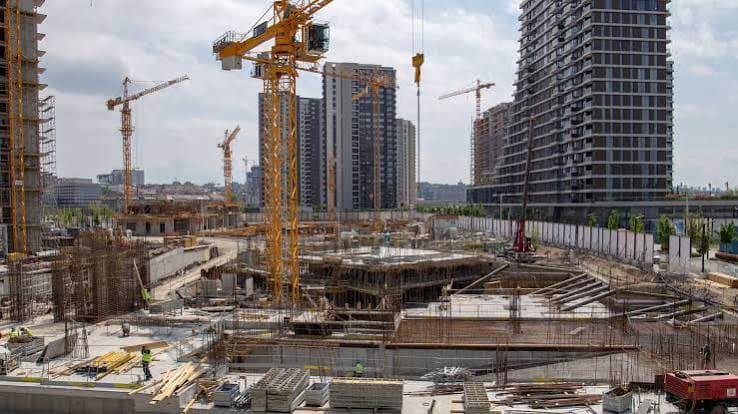
Direct vs. Indirect Jobs: Legislative Framework
US immigration law defines a qualifying job as a full-time position requiring a minimum of 35 working hours per week. Direct EB-5 investments and Regional Center projects employ fundamentally different job accounting frameworks.
In Direct EB-5 projects, the investor must demonstrate direct payroll creation supported by IRS Form W-2 filings:
- Only direct, full-time employees on the payroll of the New Commercial Enterprise (NCE) qualify.
- Employees must be US citizens, lawful permanent residents (green card holders), or individuals holding valid US work authorization.
- The investor, their spouse, and their children are explicitly excluded from job creation counts.
- Multiple part-time positions cannot be combined to satisfy the 35-hour threshold, even if their aggregate hours meet or exceed it.
Investing through a Regional Center allows developers to utilize economic input-output modeling to count three distinct categories of job creation:
- Direct Jobs: Construction workers, administrative personnel, and operational staff directly employed by the developer or project management entity.
- Indirect Jobs: Positions created within supply chains by vendors, material suppliers, and sub-contractors serving the project.
- Induced Jobs: Positions generated within the local economy when direct and indirect employees spend their wages on local goods and services.
Regional Center Job Calculation Framework
│
├── Direct Jobs: On-site construction and operational payroll
├── Indirect Jobs: Equipment vendors and material suppliers
└── Induced Jobs: Local consumer spending driven by worker wages
The EB-5 Reform and Integrity Act of 2022 (RIA) limits the inclusion of direct construction jobs in economic impact models: if a construction phase lasts fewer than 24 months, direct construction positions cannot be counted directly; job creation must be derived entirely through indirect and induced modeling parameters.
RIMS II and IMPLAN Models: Algorithms and Multipliers
Indirect and induced employment projections are calculated by licensed economists using Input-Output (I-O) multiplier models. USCIS accepts two primary analytical tools: RIMS II (developed by the US Bureau of Economic Analysis) and IMPLAN (a proprietary economic modeling software).
These models convert project capital expenditures into job creation metrics using regional economic multipliers. Inputs fall into two core expenditure categories:
- Hard Construction Costs: Direct expenditures on building materials, equipment leases, and physical construction labor. Land acquisition costs, financing fees, loan interest, and legal expenses (Soft Costs) are strictly excluded from economic impact models.
- Operational Revenues: Projected gross revenues generated by the asset (e.g., hotel, residential complex, manufacturing plant) once operational.
Qualifying Project Expenditures (Hard Costs)
↓
Regional Economic Multipliers (RIMS II / IMPLAN)
↓
Total Quantified Job Count (Direct + Indirect + Induced)
Calculation Example: A real estate development with $50,000,000 in qualifying hard costs located in Texas utilizes an IMPLAN model generating a multiplier coefficient of 12.5 total jobs per $1,000,000 of direct hard cost spend.
- Total construction job creation: $50,000,000 × 12.5 = 625 jobs.
- For a project raising $20,000,000 in EB-5 capital from 25 investors ($800,000 each), the statutory requirement is 250 jobs.
- The resulting Job Cushion is 150% (625 generated / 250 required), mitigating immigration compliance risk.
Timelines and Evidentiary Documentation for Form I-829
Form I-829 (Petition by Investor to Remove Conditions on Permanent Resident Status) must be filed within the 90-day window immediately preceding the expiration of conditional permanent residency. The core objective is proving full deployment of capital in accordance with a Matter of Ho-compliant business plan and validating actual job creation.
Evidentiary requirements differ by investment vehicle:
Direct EB-5 Required Documentation:
- IRS Forms W-2 and W-3 across the entire conditional residency period.
- Form 941 (Employer's Quarterly Federal Tax Return) filings.
- Proof of legal work authorization for all credited employees (Forms I-9, US passports, Green Cards).
- Payroll summaries detailing historical hours worked (pay stubs).
Regional Center Required Documentation:
- Escrow and project bank account statements verifying complete deployment of funds into Hard Costs.
- AIA G702/G703 Contractor’s Certificates for Payment signed by a certified architect and general contractor.
- Audited financial statements confirming capital utilization.
- Final Economic Impact Report updating job creation outputs based on actual, audited Hard Cost expenditures under RIMS II or IMPLAN models.
Construction timelines carry significant regulatory weight. If construction activities span 24 months or longer, economic models calculate the full job quota directly from qualifying Hard Costs. If construction completes in under 24 months, economists must incorporate operational revenues from the asset's initial operating period, requiring operational financial statements at the I-829 stage.
Risk Analysis and Job Cushion Verification
Analyzing the Job Cushion is a critical step during pre-investment due diligence. The cushion represents the percentage by which projected job creation exceeds statutory minimum requirements.
Common factors leading to job creation shortfalls during execution include:
- Cost Under-runs: If a developer completes construction 20% under the projected Hard Cost budget, the indirect and induced job outputs decrease proportionally by 20%.
- Operational Delays: Delays in opening a hotel or commercial asset exclude first-year operational revenues from the I-829 calculation if construction lasted less than 24 months.
- Multiplier Recalibration: Revisions to underlying RIMS II or IMPLAN baseline data sets during the lifecycle of the project.
A conservative Job Cushion target is at least 20–30% above the required 10 jobs per investor (i.e., 12–13 modeled jobs per $800,000 slot). Projects deriving their full job creation requirements exclusively from the construction phase (Hard Costs) offer higher structural protection, as job creation is fully realized prior to operational stabilization.
This material is for general information only and does not constitute legal, immigration, investment, or tax advice. Program requirements and processing practices may change. Individual results depend on the applicant’s circumstances, visa availability, USCIS decisions, and project performance.