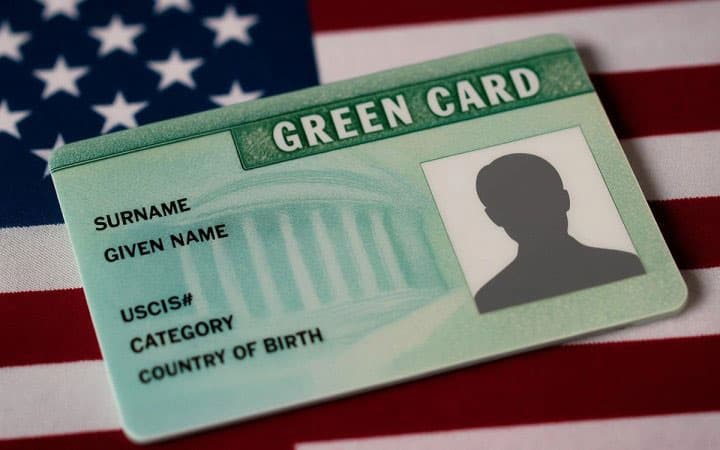
An investor commits the minimum required capital of $800,000 to the US economy and receives Priority Processing for their petition from US Citizenship and Immigration Services (USCIS).
Fast-Track Framework: The 20% Reserved Visa Quota and Priority Processing
Prior to the RIA, EB-5 applicants faced severe petition backlogs (retrogression), particularly those from high-demand countries. The reformed legislation carved out 32% of the total annual EB-5 visa allocation (approximately 10,000 visas per year) into Set-Aside Visas:
- 20% (approx. 2,000 visas) — allocated to Rural TEA projects;
- 10% (approx. 1,000 visas) — allocated to Urban High-Unemployment TEA projects;
- 2% (approx. 200 visas) — allocated to qualifying infrastructure projects.
Set-aside visas operate on a separate queue, entirely shielded from legacy backlogs.
Annual EB-5 Set-Aside Visa Distribution
| Project Category | Share of Annual Visa Allocation |
|---|---|
| Rural TEA Projects | 20% (~2,000 visas) |
| Urban High-Unemployment TEAs | 10% (~1,000 visas) |
| Infrastructure Projects | 2% (~200 visas) |
The core regulatory advantage of Rural TEAs stems from a statutory mandate requiring USCIS to process Form I-526E filings under priority handling guidelines.
Comparative Analysis: Urban TEA vs. Rural TEA
| Parameter | Urban TEA (Urban Projects) | Rural TEA (Rural Projects) |
|---|---|---|
| Minimum Investment | $800,000 | $800,000 |
| I-526E Processing Time | 24–36 months | 12–18 months |
| Set-Aside Visa Share | 10% | 20% |
| Visa Backlog Status | Retrogression for India & China | Unreserved / Current for all countries |
| Concurrent Filing | Available only when visa is Current | Available to all US-based applicants |
Under US immigration law, a rural area is defined as any region located outside Metropolitan Statistical Areas (MSAs) and outside the outer boundaries of any city or town with a population of 20,000 or more, based on the latest US Census data.
Strategic Advantages for MENA and Central Asian Investors
Applicants from the Middle East, North Africa, and Central Asia (including Kazakhstan, Uzbekistan, the UAE, Saudi Arabia, and Turkey) gain specific structural benefits by selecting rural projects.
Concurrent Filing Advantage
Investors residing in the US on non-immigrant visas (such as F-1, H-1B, E-2, L-1, or B1/B2) are legally permitted to file Form I-485 (Adjustment of Status) alongside their I-526E petition. They can simultaneously submit Form I-765 for an Employment Authorization Document (EAD) and Form I-131 for Advance Parole (travel permission). Within 3 to 6 months of filing, investors and their dependents receive open US work authorization and international travel clearance while awaiting permanent residence approval.
Protection Against Visa Retrogression
The dedicated 20% allocation for Rural TEAs mitigates the risk of visa backlogs. For nationals of countries with rapidly growing application volumes, maintaining a "Current" status in the US Department of State Visa Bulletin ensures immediate immigrant visa issuance upon I-526E petition approval.
Employer Independence
The EB-5 program grants unconditional US permanent residency to the primary investor, spouse, and unmarried children under age 21. Dependent children qualify for resident tuition rates (In-State Tuition) at state universities, reducing educational costs by 50% to 70% compared to international tuition rates.
Auditing Regional Centers and Risk Mitigation
Under US federal regulations, EB-5 investments must remain "at risk." Guarantees of capital return or fixed financial yields are strictly prohibited by law. Investors must safeguard their principal through rigorous due diligence on the project developer and the sponsoring Regional Center.
Key Due Diligence Criteria
- Job Creation Analysis
Each EB-5 investment must create a minimum of 10 full-time jobs for qualifying US workers. Regional Center projects are permitted to count indirect and induced jobs calculated via economic input-output models (such as RIMS II or IMPLAN). Target projects with a job creation buffer (Job Cushion) of 20% to 30% above the minimum requirement, driven primarily by construction expenditures before operational setup. - Capital Stack Evaluation
A conservative project financing structure typically features:- Developer Equity: 20% to 40%
- Senior Bank Loan: 40% to 60%
- EB-5 Mezzanine Loan: 20% to 30% maximum
- Collateralization and Escrow Mechanics
EB-5 capital repayment generally occurs over a 4-to-6-year horizon via refinancing or asset disposition. The EB-5 debt structure should be secured by a first or second mortgage lien on the real estate asset or a pledge of equity in the parent entity. Escrow account structures ensure capital is released to the project only after filing Form I-526E or receiving initial approval. - RIA Compliance & Operational Track Record
The sponsoring Regional Center must hold an approved Form I-956 (Regional Center Designation) and an approved Form I-956F (Project Application), alongside a documented track record of returning principal to investors in prior offerings.
Step-by-Step Roadmap to a Green Card via Rural TEA
- Source of Funds (SOF) Legal Audit
Working with immigration counsel, the investor compiles documentation proving the lawful origin of the $800,000 investment plus administrative fees ($70,000–$80,000 on average). Acceptable funding sources include corporate dividends, real estate sales, retained earnings, investment liquidations, or loans secured by personal assets. All tax obligations in the investor's home jurisdiction must be fully satisfied. - Subscription and Funds Transfer
The investor executes the Limited Partnership Agreement (LPA) and Subscription Agreement, transferring $800,000 into a designated project escrow account. - Form I-526E Filing with USCIS
Immigration counsel files the petition. If the applicant is lawfully present in the US, an Adjustment of Status packet (Forms I-485, I-765, and I-131) is filed concurrently. - Petition Approval and Conditional Residency
USCIS adjudicates Form I-526E within 12 to 18 months. Applicants located overseas complete consular processing at a US Embassy or Consulate prior to entry. The investor and immediate family receive 2-year Conditional Green Cards. - Removal of Conditions (Form I-829)
Within the 90-day window prior to the 2-year Green Card expiration, counsel files Form I-829. Proof of sustained investment and 10 job creations per investor is submitted. Upon approval, USCIS issues permanent, unconditional US Green Cards.
This material is for general information only and does not constitute legal, immigration, investment, or tax advice. Program requirements and processing practices may change. Individual results depend on the applicant’s circumstances, visa availability, USCIS decisions, and project performance.