Tax Arbitrage and the Macroeconomics of Internal Migration
The primary catalyst driving this shift is the mechanics of tax arbitrage. The top marginal state income tax rate reaches 13.3% in California and 10.9% in New York. In contrast, Texas, Florida, and Tennessee levy a 0% state income tax. Relocating a high-earning professional with an annual income of $300,000 from Los Angeles to Austin or Miami automatically frees up $40,000 in net annual liquidity purely through state tax savings.
The overall Cost of Living Index across major Sunbelt metros sits 25% to 40% below figures seen in New York or San Francisco. Lower commercial property operating costs, affordable utility tariffs, and flexible right-to-work labor laws incentivize the migration of households earning above $100,000 annually. This influx of high-purchasing-power human capital drives long-term structural demand for both residential and commercial real estate.
Developers and institutional investors are responding swiftly to these demographic trends. Population growth across southern states provides a resilient foundation for rental market expansion. A continuous stream of high-income households ensures low delinquency rates and sustained occupancy across residential assets.
Corporate Relocation: Headquarter Shifts and the Employment Multiplier
Following individual taxpayers, institutional capital and major corporations are actively redomiciling operations. Headquarter relocations by corporate giants like Tesla, Oracle, Hewlett Packard Enterprise, Charles Schwab, and Caterpillar to Texas and Florida have reshaped the geography of American business. The primary beneficiaries include the Austin, Dallas–Fort Worth (DFW), Houston, Nashville, and Tampa metropolitan areas.
Corporate relocations generate immediate direct and indirect economic impacts across local submarkets. Tesla’s $1.1 billion Gigafactory in Travis County, Texas, created over 20,000 direct jobs. According to data from the U.S. Bureau of Labor Statistics (BLS), every qualified position in the tech or financial sector generates up to 4.2 indirect and induced jobs across services, retail, healthcare, and construction.
Corporate migration is transforming specific geographic nodes. The Frisco and Plano submarkets in DFW attract financial and technology firms due to low corporate property taxes and favorable municipal zoning. Net job growth in this cluster runs at 4.5% annually, compared to the national average of 1.2%. Rapid growth in the employed population with a median salary of $115,000 creates a shortage of rental housing and commercial space, driving occupancy rates up to 96–98%.
Similar dynamics are unfolding across Tennessee. AllianceBernstein and Amazon moving major divisions to Nashville triggered an influx of high-earning professionals. Average Class A office rents surged 28% over three years, while demand for premium residential housing exceeded supply by 1.5x.
Asset Class Transformation: Demand for Multi-Family and Logistics
Demographic inflows are reshaping commercial real estate fundamentals. The primary asset classes capitalizing on this trend are Class A and Class B Multi-Family properties, Build-to-Rent (BTR) communities, and Last-Mile Logistics facilities.
In Class A and B Multi-Family assets, net absorption across Sunbelt metros consistently outpaces new deliveries. Between 2021 and 2026, rent growth across Austin, Tampa, Charlotte, and Phoenix reached 25–40%. Rapid population growth (exceeding 2% annually) quickly absorbs newly delivered supply. Net cap rates for institutional Multi-Family assets in the region range between 5.25% and 6.0%, yielding internal rates of return (IRR) of 14–17% when leveraged with senior debt.
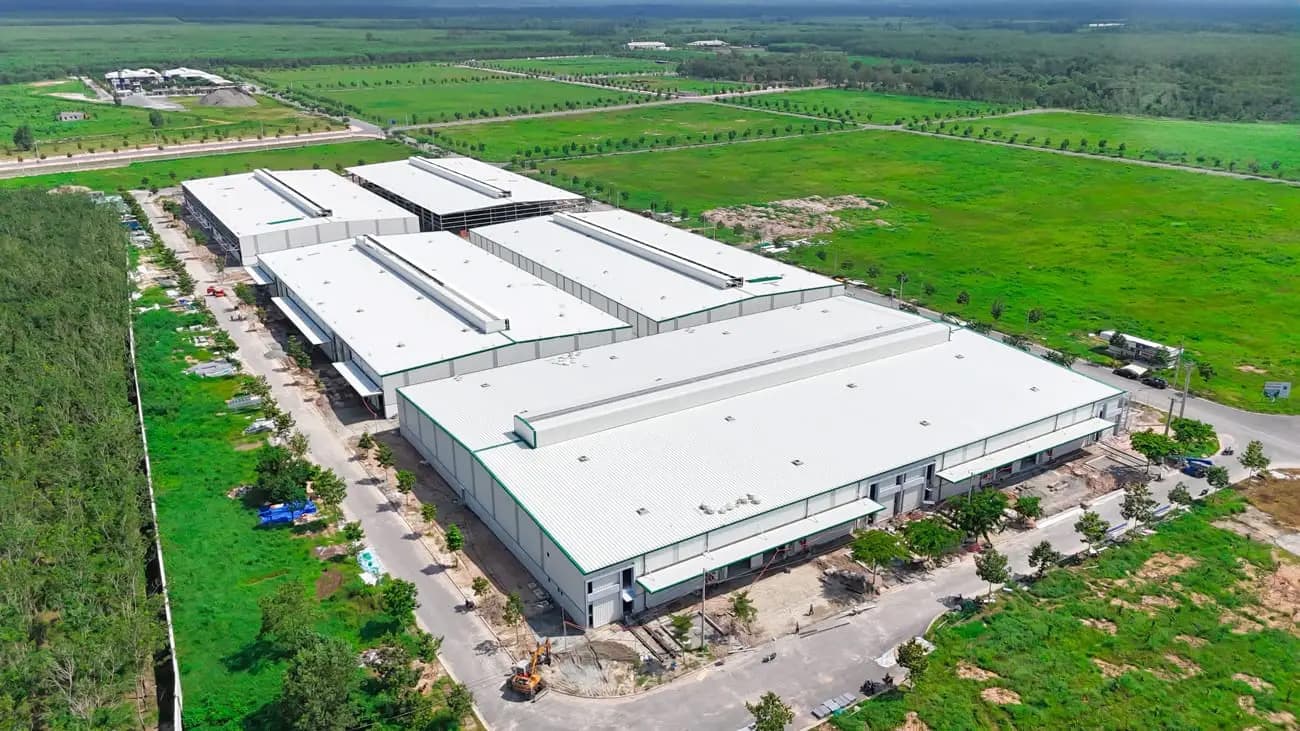
Concurrently, the industrial real estate sector is expanding rapidly. The migration of millions of consumers necessitates an overhaul of regional supply chains. Infrastructure expansions along the I-35 corridor in Texas and I-4 in Florida are accelerating demand for distribution centers. Tenants include major e-commerce platforms and national retail chains. Leases are executed on a Triple Net (NNN) basis for 7- to 12-year terms with mandatory 3.5–4.0% annual escalations, delivering inflation-hedged, predictable cash flows to investors.
Build-to-Rent communities demonstrate superior profitability in submarkets where single-family homeownership has priced out young families. The BTR format offers single-family home living within professionally managed, gated developments, delivering yields 150 to 200 basis points higher than traditional multi-family assets.
Entry Strategy: Submarket Selection and Capital Optimization
Investing in the Sunbelt requires granular submarket underwriting and optimal deal structuring. Target markets are identified by precise metrics: annual population growth exceeding 1.8%, job growth above 2.5%, and a price-to-income ratio below 4.5.
Within the Austin–Round Rock metro area, northern submarkets like Leander and Cedar Park show strong fundamentals, where highway expansions connect residential hubs directly to major tech corridors. In North Carolina, the Raleigh–Durham metro (The Research Triangle) demonstrates sustained inflows of skilled talent driven by a high density of pharmaceutical and biotechnology firms.
Institutional capital accesses these assets through Private Equity Real Estate (PERE) structures under SEC Regulation D Rule 506(c). Accredited investors pool capital with experienced sponsors, with minimum investment thresholds typically ranging from $50,000 to $100,000.
Tax efficiency is maximized using Cost Segregation studies and Section 1031 IRS like-kind exchanges. Cost segregation enables investors to write off up to 30% of an asset's purchase price as accelerated depreciation in Year 1, significantly reducing taxable income. Deferring capital gains taxes via 1031 exchanges allows investors to roll 100% of net sale proceeds into replacement Sunbelt properties, accelerating portfolio compounding.
This material is for general information only and does not constitute legal, immigration, investment, or tax advice. Program requirements and processing practices may change. Individual results depend on the applicant’s circumstances, visa availability, USCIS decisions, and project performance.