However, U.S. immigration law separates commercial profitability from compliance with the requirements to remove conditions on permanent residency (Form I-829). Direct EB-5 investments and Regional Center projects operate under entirely different job creation accounting rules. Overlooking these regulatory distinctions leads to permanent residency denials four years into a project, forcing the entire family to depart the United States.
Job Creation Mechanics: Direct EB-5 vs. Regional Centers
The baseline requirement of the EB-5 program is creating at least 10 full-time positions (35 or more hours per week) for qualifying U.S. workers per investor. The critical difference between the two investment structures lies in the job-counting methodology accepted by U.S. Citizenship and Immigration Services (USCIS).
In Direct EB-5 investments, USCIS counts exclusively direct jobs. These are employees hired directly onto the payroll of the investor's Job Creating Entity (JCE) via IRS Form W-2. Each employee must work full-time for a minimum of two years.
Regional Centers hold statutory authority to use econometric input-output models—such as RIMS II, IMPLAN, or REDYN. These models allow projects to count three distinct categories of employment:
- Direct Jobs: On-payroll staff working directly at the facility.
- Indirect Jobs: Employment generated at construction material suppliers, architectural firms, and third-party vendors resulting from project capital expenditures.
- Induced Jobs: Jobs created across the regional economy driven by the household spending of construction workers and facility employees.
|
Evaluation Criterion |
Direct EB-5 Investments |
Regional Center Projects |
|---|---|---|
|
Eligible Employment Categories |
Direct only (W-2 payroll) |
Direct, indirect, and induced |
|
Use of RIMS II / IMPLAN Models |
Prohibited |
Authorized under the RIA |
|
Form 1099 Contractors |
Excluded from job count |
Included via construction budget |
|
Construction Material Spend |
Generates zero I-829 jobs |
Converted into jobs via multipliers |
|
Day-to-Day Business Management |
Mandatory for the investor |
Handled by the project developer |
|
TEA Minimum Investment |
$800,000 |
$800,000 |
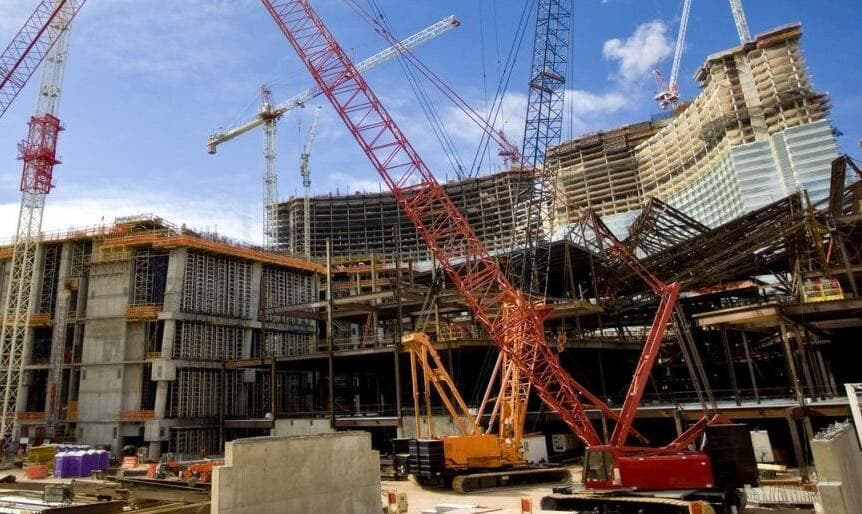
For construction and real estate ventures, this distinction is decisive. In a Regional Center development, economists take the verified hard construction budget and apply a regional multiplier. Spending $5 million to $7 million on building construction automatically generates 40 to 60 indirect and induced jobs without requiring the investor’s entity to hire a single W-2 employee.
Why Development, Fix & Flip, and Rental Businesses Fail at the I-829 Stage
The U.S. construction sector operates on a subcontracting model. A General Contractor hires specialized crews—roofers,electricians, plumbers, and concrete workers. These trades operate as independent contractors filing IRS Form 1099 or as separate Limited Liability Companies (LLCs). Under USCIS regulations, Form 1099 independent contractors are strictly excluded from Direct EB-5 job counts.
The second obstacle involves project timelines. A typical ground-up build or Fix & Flip renovation cycle lasts 6 to 14 months. Once the property sells, construction halts and the positions terminate. To secure Form I-829 approval, an investor must prove that 10 full-time W-2 positions existed continuously throughout the two-year sustainment period and remain active at the time of filing. Short-term construction contracts fail this statutory test.
Pivoting to a buy-and-hold multifamily rental model runs into staffing economics. A 30-to-40-unit apartment complex valued at $4 million to $5 million (with leverage) operates efficiently with a two-person staff: a Property Manager and a Maintenance Technician. Hiring 10 full-time W-2 employees at annual salaries of $45,000 to $60,000—plus 15% to 20% in payroll taxes and insurance—creates an annual payroll expense exceeding $600,000. This overhead absorbs the property's entire Net Operating Income (NOI), turning a viable asset into a loss-making operation.
Additionally, the investor, their spouse, and their children cannot be counted toward the 10-job requirement. USCIS officers audit Form W-2 tax filings, payroll registers, and Form I-9 employment eligibility verifications for all 10 workers during I-829 adjudication. A staffing gap of even a single employee over several months results in a petition denial.
Full EB-5 Return on Investment: Tuition Savings and U.S. Labor Market Access
Evaluating a Regional Center investment requires calculating the total financial return for the family. The $800,000 principal is repaid at the maturity of the loan agreement (typically five years) alongside annual interest of 0.5% to 2%.The primary economic return stems from two financial levers unlocked upon obtaining permanent residency.
The first lever is reduced higher education costs in the United States. Public universities—such as the University of California, the University of Texas, and the University of Florida—enforce a two-tier tuition structure. International students pay out-of-state tuition averaging $45,000 to $55,000 per academic year. Holding a green card qualifies the student for in-state tuition rates, reducing costs by 50% to 70% to $14,000–$20,000 annually.
Over a four-year undergraduate degree, direct household capital savings total $120,000 to $140,000 for one child,reaching $260,000 to $280,000 for two children. Permanent residents also gain eligibility for federal educational grants and scholarships restricted from F-1 student visa holders.
The second lever is unrestricted career monetization in the U.S. labor market. International graduates on F-1 visas receive Optional Practical Training (OPT) work authorization for one year (or three years for STEM majors). Continuing employment requires entering the annual H-1B visa lottery, where over 400,000 registrations compete for an annual cap of 85,000 visas. With selection odds at 20% to 25%, major corporations screen out candidates lacking permanent residency during initial resume reviews.
Permanent resident status grants immediate access to U.S. roles with median starting salaries in technology, finance, and engineering ranging from $115,000 to $150,000 per year. Cumulative earnings premiums over the first three years of a U.S. career reach $250,000 to $350,000. Combining tuition reductions, career earnings, and the return of the $800,000 principal transforms the EB-5 program into a high-yield family wealth instrument.
Due Diligence Criteria for Selecting a Regional Center Project to Protect I-829
To safeguard Form I-829 approval and capital repayment, investors vet Regional Center offerings across four financial and legal criteria:
- Job Creation Cushion. The project's econometric report should project 13 to 16 jobs per investor against the statutory minimum of 10. The optimal structure relies 100% on verified construction expenditures to generate these jobs, rather than projected operational revenues from a future hotel or retail center.
- Capital Stack Position. The most secure debt structure is a Senior Secured Loan, where EB-5 capital comprises 25% to 35% of the project budget, developer equity accounts for 20% to 30%, and a commercial bank provides the remaining senior financing.
- Completion Guaranty. The developer’s parent entity executes a legally binding obligation to complete construction using its own balance sheet reserves in the event of cost overruns, protecting investors against stalled builds and job-creation shortfalls.
- Pre-Immigration Tax Planning. U.S. tax residency commences upon initial entry on an immigrant visa or Form I-485 approval. Prior to this trigger date, investors execute a step-up in cost basis on foreign assets to minimize future U.S. Capital Gains Tax (up to 20% plus the 3.8% Net Investment Income Tax) and structure compliance reporting for Controlled Foreign Corporations (CFCs) and Foreign Bank Account Reports (FBAR).
This material is for general information only and does not constitute legal, immigration, investment, or tax advice. Program requirements and processing practices may change. Individual results depend on the applicant’s circumstances, visa availability, USCIS decisions, and project performance.